Program
News
© Frédéric Beauclair
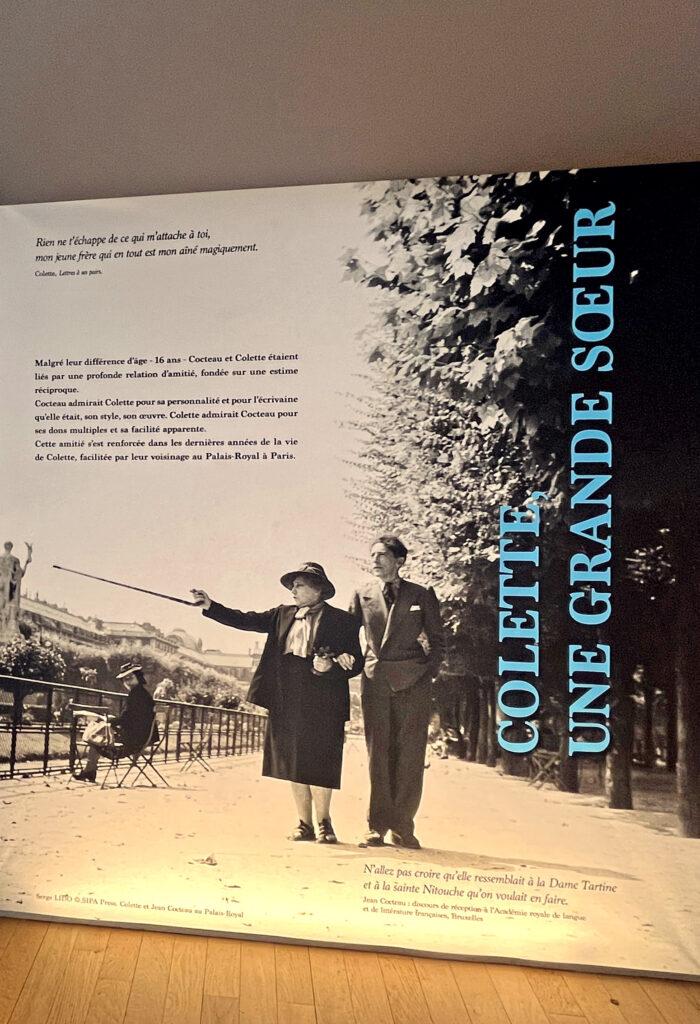
Colette, a Big Sister
→ From Saturday 3 May 2025 to Sunday 31 October 2027
From the 1900s until Colette's death in 1954, Jean Cocteau and Colette shared a friendship, and an artistic and intellectual complicity, like no other. Between the earthbound woman and the tightrope walker, how could such a bond ever have existed? The exhibition Colette, a Big Sister invites you to discover its many facets. It opens on the memory of their first meeting at the Palais de Glace on the Champs-Élysées in 1903, when Cocteau, still an adolescent, caught sight of Colette in cycling dress, a devotee of the pleasures and haunts of Belle Époque Paris. Before becoming her friend and accomplice, Cocteau was fascinated by a young woman who cast off social convention and lived freely, even at the risk of scandal. In the 1930s, as Colette came into her own as an acclaimed writer, the two grew closer still. Neighbours at the Palais-Royal in Paris, they nurtured their friendship through frequent visits, walks in that garden "for grown-ups", and affectionate letters.
As he watched his elder's strength wane, Cocteau became, in Colette's final years, an attentive and loving presence, while she recognised in him the poet who dares everything.
The exhibition gathers drawings, photographs, letters and quotations that bear witness, year after year, to this friendship. At its heart: Cocteau's Portrait of Colette, drawn in charcoal and flour, exceptionally lent by the Centre Pompidou, and an extract from Yannick Bellon's documentary, in which the two old accomplices talk of everything and nothing.
An illustrated booklet accompanies the exhibition. With contributions from two scholars, Nicole Ferrier-Caverivière and David Gullentops, it offers a deeper sense of what drew these two monstres sacrés together, and what fascinated each about the other.
The exhibition is included in your visit to the Maison.
Curated by: GIP Maison Jean Cocteau, Muriel Genthon.
Scenography: Frédéric Beauclair.
© Maison Jean Cocteau
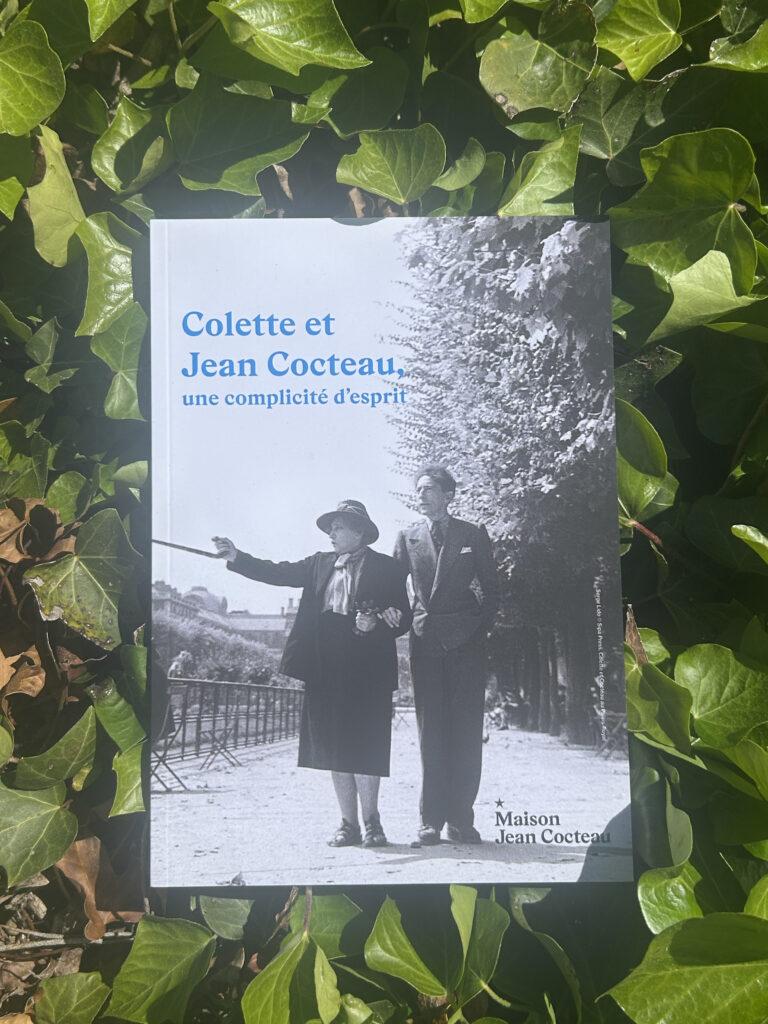
The illustrated booklet accompanying the exhibition Colette, une grande sœur
→ From Friday 17 April 2026 to Sunday 31 October 2027
Following the exhibition devoted to the Marais–Cocteau couple, Colette, une grande sœur invites visitors to discover the many facets of Cocteau's friendships. His bond with Colette (1873–1954) took many forms. He was her "little brother" indeed, when, as a teenager, he crossed paths with a free-spirited young woman; and he remained so, attentive to the hardships of old age, when later he became inseparable from a failing companion.
Thanks to the contribution of Nicole Ferrier-Caverivière, agrégée in literature and doctor of letters, this friendship is traced through every stage of their lives. It begins with the happy childhoods whose tenderness both would carry with them for life. Then comes the woman who, in the early years of the twentieth century, claims her emancipation; a few years later, she is answered by the fascination of a young man sixteen years her junior, who disowns his first poems to find himself in the nonconformism of a free woman. Nicole Ferrier-Caverivière shows how this scandalous side, so far from the image of the respectable old lady of her final years, lies at the root of the deep friendship that bound these two writers.
For David Gullentops, professor emeritus at the Vrije Universiteit Brussel (VUB) and a leading specialist of Cocteau's work, the tribute Cocteau delivered in 1955 on joining the Royal Academy of French Language and Literature of Belgium, where he took his friend's seat, is a chance to show how this friendship nourished the poet's path and his work. Drawing on numerous references to Cocteau's writings and public addresses, his text unravels the themes on which the tribute rests, brings to light its sources of inspiration, and reveals the images of her that Cocteau kept.
This illustrated booklet is a companion to your visit of the exhibition Colette, une grande sœur (see Exhibitions). The Maison Jean Cocteau exists to help us understand this artist's place in his century, within the enchanted setting he left us, one that endures thanks to the Île-de-France Region. Not to be missed.
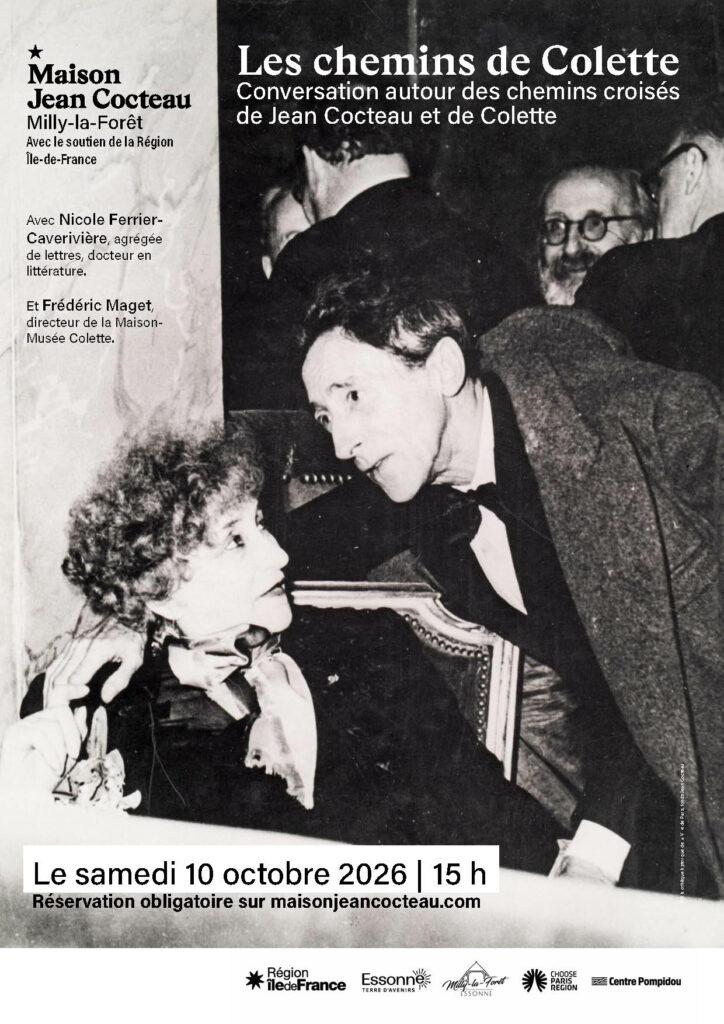
The Paths of Colette
→ À partir du Saturday 10 October 2026
A conversation between Nicole Ferrier-Caverivière and Frédéric Maget
To mark the 63rd anniversary of Jean Cocteau's death on 11 October 2026, and in echo of the exhibition Colette, an Elder Sister on the Maison's second floor, we will welcome two Cocteau scholars for a conversation between them, wandering the paths of Colette that crossed Cocteau's own.
Nicole Ferrier-Caverivière, agrégée de lettres (holder of the French agrégation in literature), doctor of literature.
Frédéric Maget, director of the Maison Colette in Saint-Sauveur-en-Puisaye.

© Maison Jean Cocteau
A creative day at the Maison Jean Cocteau
→ From Friday 13 November 2026 to Sunday 13 January 2036
As part of the 10th edition of the "Patrimoine en poésie" competition, the Maison Jean Cocteau welcomed seven young people with disabilities from the Gillevoisin medical-educational institute for a day filled with discovery and creativity.
On the programme: an adapted tour of the house led by one of our mediators, a walk through the garden, and an acrostic writing workshop facilitated by Chloé Beaudet.
A multi-talented artist – author, director, actress and poet – Chloé Beaudet participated as part of the partnership with the "Culture du Cœur" association. We invite you to discover the poetic creations of Warren, Wanyss, Hugo, Christophe, Nolan and Luis, who each found their own way to celebrate their heritage through words.
Exhibition
© Frédéric Beauclair
Colette, a Big Sister
→ From Saturday 3 May 2025 to Sunday 31 October 2027
From the 1900s until Colette's death in 1954, Jean Cocteau and Colette shared a friendship, and an artistic and intellectual complicity, like no other. Between the earthbound woman and the tightrope walker, how could such a bond ever have existed? The exhibition Colette, a Big Sister invites you to discover its many facets. It opens on the memory of their first meeting at the Palais de Glace on the Champs-Élysées in 1903, when Cocteau, still an adolescent, caught sight of Colette in cycling dress, a devotee of the pleasures and haunts of Belle Époque Paris. Before becoming her friend and accomplice, Cocteau was fascinated by a young woman who cast off social convention and lived freely, even at the risk of scandal. In the 1930s, as Colette came into her own as an acclaimed writer, the two grew closer still. Neighbours at the Palais-Royal in Paris, they nurtured their friendship through frequent visits, walks in that garden "for grown-ups", and affectionate letters.
As he watched his elder's strength wane, Cocteau became, in Colette's final years, an attentive and loving presence, while she recognised in him the poet who dares everything.
The exhibition gathers drawings, photographs, letters and quotations that bear witness, year after year, to this friendship. At its heart: Cocteau's Portrait of Colette, drawn in charcoal and flour, exceptionally lent by the Centre Pompidou, and an extract from Yannick Bellon's documentary, in which the two old accomplices talk of everything and nothing.
An illustrated booklet accompanies the exhibition. With contributions from two scholars, Nicole Ferrier-Caverivière and David Gullentops, it offers a deeper sense of what drew these two monstres sacrés together, and what fascinated each about the other.
The exhibition is included in your visit to the Maison.
Curated by: GIP Maison Jean Cocteau, Muriel Genthon.
Scenography: Frédéric Beauclair.
Contemporary art
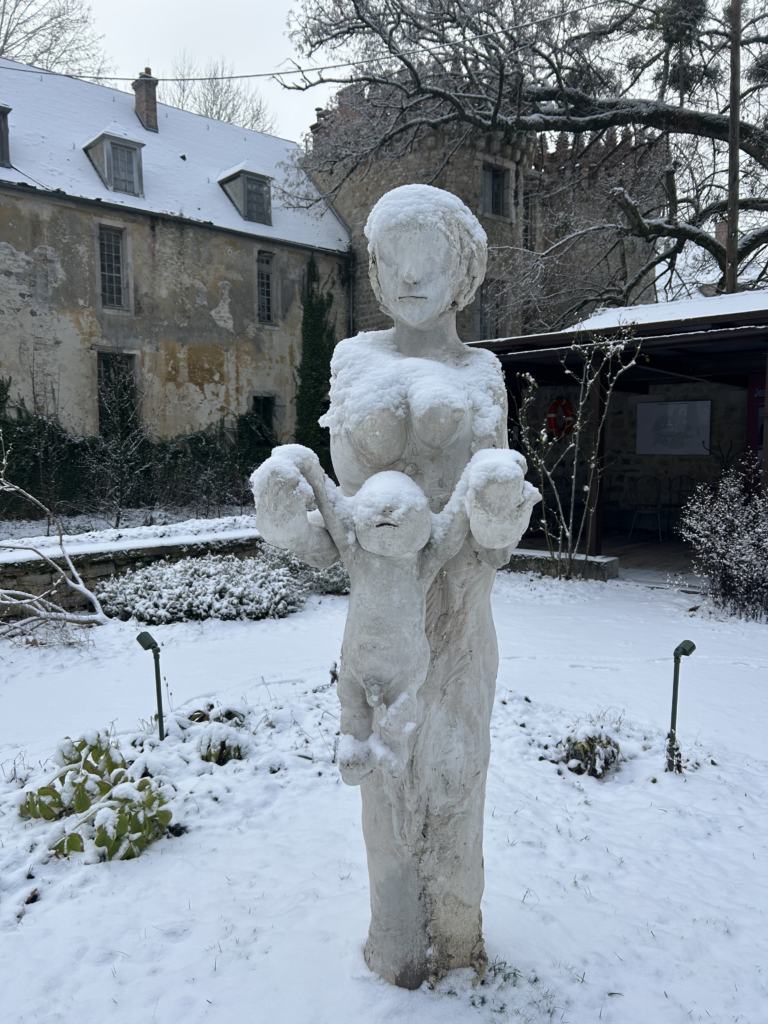
Photo Vierge d’Ile-de-France nord, ciment et plâtre, collection du FRAC Ile-de-France
Michel Charpentier’s works installed in the garden of the Maison Jean Cocteau
→ À partir du Thursday 17 April 2025
Two sculptures by Michel Charpentier (1927-2023), from the collection of the FRAC (Fonds régional d'art contemporain) Île-de-France, now stand in the back garden of the house.
Echoing the FRAC's 2025 exhibition Berserk et Pyrrha, which explored the links between contemporary and medieval art, the Maison Jean Cocteau wished to keep the two Vierges d'Île-de-France (Virgins of Île-de-France) on long-term loan once the exhibition ended. They now stand in the garden facing the entrance.
At first glance, these two Virgins and Child may surprise with their grotesque, somewhat crumbling appearance. Charpentier was devoted to life-size outdoor sculptures in grey cement, and for him they reflect a suffering humanity, much like his Cantatrices (Singers), with their mouths wide open. They recall the statues of the cathedrals of Île-de-France: one South, one North, as if each had been placed before a church portal. They belong to the history of the Region, a history the sculptor tinges with humour and mockery. Behind them rise the walls of the old château that adjoins the garden, a link between cathedral statuary and the château's medieval origins. But this Middle Ages is thoroughly reinvented.
Charpentier and Cocteau knew each other. It was in Rome, when Michel Charpentier was a resident at the Villa Medici, that Jean Cocteau noticed his strangely unsettling sculptures. "It's wonderful! We must help this young man!" the poet said, moved by this vision of a suffering humanity steeped in the sacred. It was a vision that, without a doubt, brought the two men close.
At the far end of the orchard, like a gentle Cerberus, Charpentier's Chienne assise (Seated Dog) seems to keep watch over the gate. The technique of hand-worked cement over a metal armature gives the animal, one of a series, a kindly air despite its prominent muzzle.
The man speaks of his work with great simplicity, with a kind of constant wonder before its mystery.
"What is sculpture, in the end? It is dream in solid form!"